We’ll be giving away 25 copies of the full Piano Encyclopedia Product.
YES, you read that right!
Twenty-five people will get the Full-featured complete copy of the ready-to-sell product for FREE.
I can’t tell you more since we haven’t defined the details of this new free release…
BUT, if you want to know more, stay tuned -and make sure you are already in our mailing list.
If you haven’t subscribed yet, make sure you do now- and I’ll make sure you to send you all the juicy details: Sign-up to our mailing list.
After many months of hard work and development, April will be a incredible month for The Piano Encyclopedia with many events… so I’m sure you wouldn’t want to miss all this out.
So stay tuned and I’ll be back shortly with more news!
Cheers!
Rod
P.S: If you haven’t done so yet, you might want to check out all the exciting new features we’ve been releasing for the past few monthsm right here: The Piano Encyclopedia’s New Features
P.S 2: Remember, if you want to know more about the 25 free copies that we’re going to give away and discover how to get one yourself- and you don’t want to miss the chance- make sure to sign-up to our newsletter to stay in tune with the latest news; by clicking on the following link:
We wanted to thank everyone that supported us until now- and in the name of the whole team- wish you a wonderful New Year with lots of Piano learning!
And here’s some great news for you: these last two months have been of intense amounts of work with lots of progress and new features!
You’re going to love this: We’ve expanded our database to cover all the most used chords, scales, intervals, and harmonies throughout the Whole World!
Believe it or not, you’ll now be able to explore all the chords, scales, and harmonies used for all the Western and Eastern Music.
Think about it, you’ll be able to master all the music styles of your choice: Jazz, Blues, Rock, Pop, Classical, Flamenco, Spanish, Chinese, Jewish, Indian, Arabic, and the list goes on! And we don’t stop there, you’ll get to explore all the exotic chords and scales you can think of -and we’ll keep adding content with our constant updates.
But before I jump into details, let me say this: not only you’ll be able to learn what scales or chords do music styles have in common, but you’ll be able also to compose or improvise any melody -on any music style you like- by using the Harmony Dictionary.
Believe me, you’ll just need to choose a music style from a list, and the Harmony Dictionary will show you what chords to play, and what notes you should play in your melody lines during each of those chords, so that your composition or improvisation sounds like that music style you just love- call it Jazz, blues, Classical Indian music, Western Classical Music, or a Rock music piece. Not only you’ll be able to look at all the keyboard diagrams and listen to those harmonies and chord progressions, but you’ll also be able to print them in a practical print-friendly format so that you can practice them at your piano.
Most important of all, the lessons will teach you *how to* harmonize any scale, and all the music theory concepts behind it.
But, that’s only half of the story… for each scale or chord entry, you’ll be able to explore all the different used equivalent names, their history and origin. For example did you know that the Major Scale is also called “Ionian” Scale (as known by the Church Modes) or that in Indian Classical Music the Major Scale is also used, but by the name of “Mela Dhirasankarabharana, or even that in Ethiopian Music this common scale is called “A Raray”? Stated a little differently, this means that no matter your musical background, you’ll be able to find any chord and scale you want, using any of the different culture’s names. And you’ll enjoy yourself when you’ll discover that *that* scale you didn’t know, was just the same as one of the scales you already knew but with a different name. For example, did you know that the famous “Jazz Minor” Scale is just a different name for the Melodic Minor Ascending Scale?
More important than that, for each entry we have included practical tips from expert composers and musicians, which will tell you *how* to combine those chords and scales to make professional compositions -according to each music style.
If you’re an experienced piano player, or if you frequent music stores you must have noted those Chord and Scale dictionaries, each having in the cover a different musical style: “Jazz Chord Dictionary”, “Blues Chord Dictionary”, or even “Rock Chord Dictionary”. Sadly, if you look at the index of any two of those books, you’ll discover that they share about 80% (!) of the same content, even thought they are two separate books! Can this be true? Well this should be no surprise for advanced musicians, as of course, all music styles are related, but it really is a big surprise for the firm that receives the triple amount of money and the victim that has bought the three books with 80% repeated content. Well forget all about that, as with The Piano Encyclopedia you’ll get a concise learning experience that will let you explore all musical styles: you’ll be able to explore Jazz’s, Blues’, Rock’s, Indian’s, Jewish’s, Chinese’s (or whatever to other style you like) Chord, Scale, and Harmony dictionaries with just a mouse click, and learn what do all have in common!
Make no mistake, this is the first time a Chord Dictionary, Scale Dictionary, Interval Dictionary, and Harmony Dictionary, are combined into just one product -and interactively explaining the relationships between each of these components. One thing I want to stress, is that 90% of pianists do not know that there exists an intrinsic relationship between chords and scales, intervals and chords, and scales and harmonies. Seriously, put some thought into this, with The Piano Encyclopedia you’ll learn all these music components at once, their relationship, and how to use them to play professionally, learn composition and improvisation.
Oh Wait! I almost forgot! There’s even more new stuff, we just finished developing a Chord, Interval, and Scale Finder. Yes, you read that right, different from many others, it’s a Chord, Interval, and Scale Finder- all together! That means that you’ll be able to input the notes and the The Piano Encyclopedia Finder will tell you if you’re playing an interval, a chord, or a scale, and all the information you need to know about it. Even if the notes are not part of our database, the finder will analyze the chord or scale throughout a structural and harmonical analysis. You think I’m lying, don’t you? No…we have really incorporated intelligent algorithms that will analyze any chords or scales you input, as well as a professional musician would do.
I’m not kidding, this means that -for example- you’ll be able to view all the inversions and voicing of even an unknown chord, explore it’s musical structure and it’s relation with musical intervals, and even learn how to combine it harmonically with other existent chords to create new chord progressions -by just entering a chord in your computer! Imagine using this tool for your own compositions…
So let me summarize and review; the current developed features are:
Intervals -> every interval explained, as well as their relation with chords and scales.
Scales -> about every scale on the planet and in every root
Chords -> all standard chords and even all of the strange and exotic chords, full of expert’s tips for composing and improvising.
Harmony -> the harmonization of every existent scales, categorized by musical style
Compose & Improvise-> all chords that can be used with a certain scale, typical chord progressions, and chord substitutions.
Interval, Chord & Scale Finder -> if you don’t know what you are playing, simply let the finder help you. Just input the notes and finder tells you what scale, chord, or interval you are playing.
And Much More…
By now, you’re probably wondering if this will work for you…
It turns out that this learning experience has been designed both for people that know only piano basics as well as for intermediate and advanced piano players. You’ll be able to decide on what topics to learn, what scales and harmonies to explore, and their level of difficulty, as the experience will take you from the very basics up to mastering professionals levels.
I know you’re probably skeptical. Right? You want to see how it works right now?!
To stay in tune with the latest updates, check out the community room,
we’re always looking for contributors and welcome new suggestions,
so feel free to leave messages and tell us more about you.
Cheers!
Rod
P.S: Just as a quick refresher, you didn’t happen to miss The Preview?
We’re proud to announce our first public appearance on YouTube!!!
A team of highly-inspired musicians and software developers wants You to experience a revolutionary piano learning method:
The Piano Encyclopedia - the first practical piano encyclopedia in the world.
You will enjoy more than 700 pages of unique content, 2500 piano recordings, and 2400 interactive illustrations of piano keyboards showing how to master scales, chords, intervals, keyboard playing, improvising, and composing!
WELCOME to this new experience!
I’m Rod, the founder of Forgotten Dreams Corp. and the manager of The Piano Encyclopedia development, and I want to invite YOU to be one of the first to try out this revolutionary piano-learning method.
The first people that sign-up to our mailing list will be given the possibility of becoming one of the first to try out The Piano Encyclopedia.
We’ll be releasing a LIMITED number of invitations!
Let me tell you more about the new features we developed for you:
You might wonder… well the Piano Encyclopedia has more than700 pages of unique content, how am I ever going to learn all that?!We have though about this and we made it as SIMPLE as ever. You’ll be able to learn all the material in very short time. How?!
Well, the Piano Encyclopedia was developed under a systemic approach as we want you to easily understand how everything works and give you the harmony secrets unveiled so that you can:
Learn how to play ANY chord by just knowing the basic intervals. Master all the 7th, 9th, 11th, and 13th chords!
In this approach, not only you’ll be able to play any chord you see on a song, but you’ll be able to create your own new chords and be able to predict if they will sound dissonant or consonantbefore even playing them, by just analyzing the intervals.
Forget about counting tones and semitones and memorizing how many notes you should skip, once you know the basic music intervals, you’ll be able to play chords and scales in no time!!!
You’ll have the most complete reference material available worldwide for piano playing, improvising, and composing, with hundreds of illustrated, animations, and piano sound recordings!
The intervals approach to learning music is so important to us that we developed some tools to make your piano learning easier!
Chord Musical Structure Analyzer
For every chord contained in the encyclopedia you’ll be able to view it’s structure decomposed in the different music intervals! For example, if you click on D minor chord ’s musical-structure icon you would see an illustration of the intervals that compose this chord: a Perfect fifth and a minor third. This way you will know that in order to play ANY minor chord you will just need to find the perfect fifth and minor third above the root. See? No memorizing of tones and semitones is needed once you know intervals! And this approach will help you later in understanding harmonic analysis in our Harmony Guide, included in The Piano Encyclopedia.
Once you know all the basic three note chords and the basic intervals, you’re ready for all the rest of them! So if you decide to view the musical structure of a A 9 Chord, then you’ll be shown an illustration of the Major Triad+ 7 interval + 9 interval. You’ll see it graphically, with keyboard illustrations, so you’ll never forget it, and you’ll be playing different types of chords in ALL tonalities in no time!
The best part is: the keyboard illustrations are not just static images. EVERY illustration throughout the whole the Encyclopedia is interactive and you’ll be able to listen to it’s sound, or even go the musical structure of the chord or scale you are viewing, with just a click!
This means that you’ll be able to play the sound of each interval that composes your chord under analysis, and then compare them with the sound of the chord itself. So if you are analyzing a C7 chord with The Piano Encyclopedia, you’ll realize that the 7th interval is the one that gives the most tension to the chord and makes it more dissonant, by just listening to the different sounds.
Scale Musical Structure Analyzer
Yes! Same as with the chord analyzer, you’ll get to analyze scales and decompose them in the intervals that they form. For once, you will learn the difference between all the minor common scales with a systemic approach (the minor natural, the harmonic minor, and the jazz minor, etc). Not only you’ll be able to analyze the common scales, , but EVERY existent scale on piano playing, jazz scales, blue scales, major church modes, minor modes, all of them!
Using the same systemic approach as chords, the knowledge learned in chords will help you to learn all the common scales necessary for composing and improvising at the piano. For example, did you know that if you play a Maj7 Chord with 9th, 11th, and 13th you get a Major scale?! Yes! play the Maj7 chord: C E G B and now play the 9th, 11th, and 13th tensions, D F G. If you play this in open form you’ll get a very nice sounding chord, while in closed form you get the major scale . Nobody told you that before?!
Well yes! Chord and scales are closely related, the key is knowing the intervals, and this will let you learn much faster than before and make important progress in less time!
More importantly, let me tell you one of the most important music *secrets*, all chords have related scales, and you can use this related scales, to improvise your melody in. To know what scale you should use, you just have to play the chord with all it’s tensions (7th, 9th, 11th, 13th) and then play the same notes in closed form: you’ll get a scale! All the chords that harmonize the C major scale, form the C major scale when played in closed form with all its tensions (with the only difference that the scale is produced in a different order, not starting in C ). You’ll discover all this inside this great interactive Encyclopedia and for once you’ll understand the use of mode scales in piano playing, and how they play an important role in composing and improvising.
Inversions & Voicings
Looking for that professional sound that you think only experienced piano players can produce!?
You’ll be able to click on any chord you like and view ALL it’s inversions, and listen to their sound!
Do you know voicings?! Do you know the result they can produce on your overall performance? Voicings means just to play a chord different than closed form, for example shifting the second note every note chord you play, an octave higher. Counting from the right, this voicing is called Drop 2 and is used by professional Jazz players, and in block chord harmonization. This simple trick can change your sound quality, try it and tell me your results!
If you want to achieve a professional sound, this is the way to go, and you’ll be able to listen and view all the most used voicings used in classical, jazz, blues, chorales, and orchestra music and compare them! (closed, open, Drop 2, Drop 2&4, Skip 2, Skip 2&4, and more voicings!)
It’s not only an Encyclopedia… it’s so much more!!!
The Piano Encyclopedia is a community! Yes! If you are connected to the internet while using The Piano Encyclopedia, you can optionally use the community features we provide. The encyclopedia has an integrated sticky online chat where you can leave questions that can be answered by the whole piano community. Not only you’ll be able to communicate with all the users using the software, but also with all the visitors that do not own the software and come to join our new chat room. The messages do not get erased and stay for days, so that you might leave questions for other members of the community to answer. You’ll get access to our blog directly from The Piano Encyclopedia too and to special pages where you’ll be able to suggest features and join development discussions of new features! We expect to continually developing new and better features based on user’s feedback.
As a user of the Piano Encyclopedia you’ll also be able to suggest new chords and scales to add them to our existent database, so that we post software updates! In this way we compromise to build the most complete reference material existent!!!
The idea of integrating online material in the Piano Encyclopedia (internet connection will not be required, but if you’re connected, all these features will be enabled) is so that we can include also video lessons and many more multimedia examples where everyone can comment and form discussions about the different learning topics. In this way you won’t get a static encyclopedia, but a dynamic way of learning where you’ll be able to learn about other people’s questions and see if they had the same difficulties as you did.
I hope you enjoyed all these new features!
SOON We are going to provide a LIMITED NUMBER of INVITATIONS for the special beta test release.
SO if you want to be the FIRST to try The Piano Encyclopedia, remember to SUBSCRIBE to our blog by email!
We’ll be sending the invitations to a LIMITED number of users.
A long time has passed since our previous post and we have SO many new things to tell you!!!
It has been amonth of hard work and lots of excellent improvements and new features!!!
We’re so excited with the new results that I don’t know where to start!
We have more than doubled the content of our Encyclopedia!!!!
350 700 pages of unique-content about everything you wanted to know about keyboard playing, composing, and improvising on the piano.
300 2400!!! full-color illustrations of piano keyboards picturing chord, scales, intervals, and how to harmonize any existing scale!
The Piano Encyclopedia now has SOUND. Yes!!! You can now listen to more than 2500 piano recordings and listen to any chord, interval, or scale.
You can listen to any chord played in block, arpeggio, or just listen to it note-by-note!
Listen to any scales in ascending or descending form, and understand for once why the minor scale has two different forms depending if played up or down.
Harmonize scales and try your own chord progressions and listenthem right on your computer.
Yes! You’ll now be able to harmonize any scale (major, minor, arabic, jazz scales, everything you ever wanted will be at your reach with just a click) and The Piano Encyclopedia will tell you what chords you should play for each given note of the scale.
This all sounds wonderful, but the best part is that apart from being shown what chords to play, YOU will learn how to harmonize any scale you ever want!
The technique is easy and it’s something that has changed completely my approach to piano playing. After I learned this a whole new path was opened for me, and I began understanding how to improvise and how to compose on the piano. You will begin too to understand music for real, not only being able to compose and improvise, but to also understand WHY songs you like sound well. And I am not talking about only popular songs… classical pieces, rock, any style, once you understand music you’ll learn that all styles, no matter what you play, have a common structure in common.
The practical study of harmony will open your eyes, and lead you to paths you never thought you were going to reach. And I am not writing this just to interest you, this is what was my path in learning piano, with years of playing pieces without knowing all this until I discovered this wonderful knowledge that changed everything. I am now able to compose, improvise, and even understand better the pieces I play from other composers. Now even when I play Chopin waltzes or Sting’s song I can see the harmony behind, and understand why certain passages sound that well.
I assure you that once you get to understand something as simple as how to harmonize scales, your whole piano playing perspective will change!
In the next post I’ll tell you about all the other features our team has developed!!!
Please give us feedback and tell us if you like them. Your feedback is the most important thing to us, as it enables us to create developments based on the piano community’s needs, and our goal is to teach music, composing, and improvising at the piano, with the most efficient, practical, and easiest approach.
I am happy to tell you that we have our first poll ready for YOU to decide what is going to be the first FREE software release!
Please tell us by voting on the poll on the right side panel.
We want your comments and opinions!
We listen to YOU!
Yes! Our team wants to develop great creations just for you, so we need all your feedback.
Here at The Piano Encyclopedia we plan to release many free products that are useful for intermediate and advanced piano players, or even those who are just starting and want to learn faster and efficiently.
Say no to hours and hours of practicing and no progress. You need tools and we plan to provide you with them, so that you can make great achievements in less time.
Would you be interested in learning chords? Never found out what scales were useful for? Or would you need some help on composing and improvising and would love to learn about harmony? Did know that intervals are the primary structure of chords, scales, and … music?
Let me tell you in more detail what we plan to cover in our future releases, so that you can tell us what you wish to try first:
Chord Dictionary
Contains chord and families of chords displayed graphically with keyboard illustrations and colored keys, ordered chromatically in order to learn them and memorize them easily, as well as in circle of fifths (useful for modulation purposes- aka changing from one scale to another).
All chords are accompanied by a description of their structure, a useful tip about their functionality and how they are used in compositions, as well as all the names and synonyms for that chord including popular, jazz, and blues standards.
Scale Dictionary:
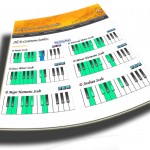
Contains scales and families of scales displayed graphically with keyboard illustrations and colored keys showing all the keys that should be played corresponding to the scales.
They are also ordered chromatically in order to learn them and memorize them easily, as well as in circle of fifths (useful for modulation purposes- aka changing from one scale to another). All scales are accompanied by a description of their structure, as well as by all it’s equivalent names.
Intervals Dictionary:
Intervals are the main structure of chords and scales. Contains intervals and families of intervals displayed graphically with keyboard illustrations and colored keys showing all the keys that should be played corresponding to the scales.
They are also ordered chromatically in order to learn them and memorize them easily, as well as in circle of fifths (useful for modulation purposes- aka changing from one scale to another). All intervals are accompanied by a description of their structure, as well as by all it’s equivalent names.
Harmony Dictionary:
This is a very special dictionary, my favorite by the way, which shows how to harmonize any scale. Given each scale, it shows symbolically and graphically, with high-quality keyboard colored illustrations, what chord you should play given each note of each scale.
This is useful for composing, improvising, or even predicting what chord comes next in your favorite song. If you are a starter in harmony, this will probably open your eyes and your view and understanding of music will change completely. If you are more experienced, this will help you for a deeper understanding, and to be able to play along and compose in different scales more easily. I personally use them for composing my new songs.
The poll is on the right side of this blog.
(“What are you most interested in learning” poll).
Hope you have a great day!
In case you forget… remember to vote and submit any comments you want!
Thanks for being part of the piano encyclopedia, we are working hard towards improving your piano learning experience.
Cheers!
Rod
P.S: Remember to subscribe to receive special free products and updates.
Welcome! My name is Rod and in the name of our team I want to introduce you to our new fresh creation:
The Piano Encyclopedia- the first practical encyclopedia for keyboard playing, composing, and improvising in the world.
More than 350 pages of unique content and more than 300 original full-color illustrations of piano keyboards, showing how to play scales, chords, intervals, as well as how to harmonize scales on the piano.
Learn about our Mission
Our mission is to help music and piano learning become an easier task revealing practical techniques that are not usually taught and can help you improve your playing and composing skills through a deep understanding of how music really works.
We concentrate on your needs
You want to learn piano without having to spend years practicing?
Tired of playing everybody else’s songs and not being able to compose one note yourself?
Tired of not knowing how to play this or that chord that always appears in your favorite songs?
Wouldn’t you like to print in a booklet-form all your most used chords and have an easy way to study and memorize them?
Tired of not understanding music behind scores?!
Every teacher tries to teach you scales but yet any can’t tell you what they are used for?! Get answers, get power!
Learn how to use scales for improvising and composing, or even learn how to predict what chord comes next in your favorite songs!
You want results and you want them fast?!
Your piano chord, interval, and scale, questions will be answered forever!
You get a chord dictionary with all the existent chords used in piano playing: Jazz, Blues, classical, chords from every style.
You get a scale dictionary with all the existent scales on the piano, all ordered by their use: common scales, major and minor mode scales, jazz scales, arabic scales, blue scales, and even rare scales.
You get an interval dictionary with all the used intervals on the piano: common intervals, extended intervals (9th, 11ths, 13ths), and all types of alterations explained, so that you understand graphically how chords and scales are made up from!
You get a Harmony dictionary that explains what chords you should play in each given scale! You get the harmonies for all the most used scales: the common scales and all 35 modal minor and major scales.
More than 40 scales with examples of how they should be harmonized so that you can begin composing and improvising on any scale you want!
You get a chord dictionary, a scale dictionary, an intervals dictionary, and a harmony dictionary all in one in this great encyclopedia!
And if this is not enough: you get also samples of chord progressions and instructions on how to create them, as well as additional music theory!
I am sure you still want more: so we have also prepared special lessons designed special for this encyclopedia so that you can use all this material more wisely and structure you own piano lessons and enlighten your path to becoming beter at piano playing, composing, and improvising!
The Piano Encyclopedia will provide you with tools to maximize your learning capabilities and make important progress achivements, in much more reduced times!
Release
The final version is not ready yet but we are working on it to provide you with the best content to create the first practical encylopedia for piano playing, composing, and improvising in the world.
Make sure to check back often for updates and our release date!
Leave your comments and also request new features!
Cheers and hope to see you back soon!,
Rod
P.S: We’ll be releasing a FREE dictionary! Vote in the poll on the right panel so that we can decide if to release a FREE chord, scale, intervals, or harmony dictionary!!! Be heard! We listen to YOU!
aguirremanuel : Hi People, I'm venezuelan guy, I dont speak english but i love the piano and the computer programming, I wanna testing your software for give my opinions and my recommendations.
Rod : Hi Schumman lover! I like Schummann . I haven't played anything from him yet, but I have listened to many pieces are lovely. Actually the Romantic period is one of my favorites -you must know Schummann is from that time- so I also really love Chopin, and particulary the late works of Beethoven. Do you have any recommendations of good pieces from Schummann to listen or play ? Hope to hear from you soon
Rod : Pianissimo! I received your mail. I sent you another one! I am glad you liked the article, I'll make sure to share any more intresting articles I read! Make sure you do to
Rod : ... and Page 2 of the music sheet of "Requiem for a Dream" can be found here: «link» . I hope you enjoy and then tell us how did it go!
Rod : Hi! Thanks everyone for stopping by . The music sheets for "Requiem for a dream" can be found here: Page 1, «link» and...
Pianissimo! : I seny you an email Rod please check your inbox:D!
Pianissimo! : Thats a very nice article:P please post more:D
Guest_2432 : do anybody know whrer i can find the sheets for the soundtack "Requiem for a dream"
Guest_2432 : i have a question
Guest_2432 : hello
Rod : Hi Pianissimo! It's great to find you here, it's a pleasure to chat with you Yes I agree with you the performer is not as great, but it was really difficult to find a video of that piece. Yesterday I just read a really intresting article about the Goldberg Variations. I told you so much about it that made me wanna research more I found this very intresting article «link» and an intresting new performer: Simone Dinnerstein. Beware that there her recordings are comparted to Gould's 1950's recordings, while his 1982's recording are the "perfect" ones . Stay in touch!, Take care
Pianissimo! : If you need help please feel free to ask and I will try to asist you
Pianissimo! : And the link of it the performer perfoms it very bad/fast/ I don't think he is mature enough for it... :!:
Pianissimo! : Yes Rod I was speaking about the liszt piece!:P Are you here now
Rod : Hi Masha! Thanks for stopping by! Let me help you: "music on the papers" are called "music sheets" or "music scores" in English. You'll find them easily on google, or you may try this link: «link» . This a great site for Cla ssical music scores that are free. Popular music scores are usually sold but you could get lucky if you search . Tell me more about you and stay in touch! Cheers!
Masha : How it sounds in English "musik on the paper"? I am from Ukraine, and I have no vacabulary with me now, so, please, help me!!!!!!
Masha : Please help me!
Masha : I can not find in internet how to play "Only hope" from "A walk to remember"? but not video, but on paper. I am form Ukraine, so I do not know how it is sounds in English!
Rod : I didn't know him but he is Daniel Rivera, which seems to be pretty good . That concerto is incredible! By the way, regarding the music piece you recommended me, Années de pélerinage Vallée d' Obermann, were you taking about this: «link» ? From Liszt . See you soon!
Rod : As you may know, I am leading The Piano Encyclopedia development. We have been working for almost a year, and we'll be releasing the first public beta by December, and having many previews and small releases along the way. So I would be glad to give you a sneak peak into the development and I would appreciate your feedback too My email is «email» .
Pianissimo! : I would be honored!
Pianissimo! : Sure:D
Rod : I'll give you my email
Rod : Hey let's stay in touch
Rod : for me it's a story that really gives me a chill. You may know that at his late age he didn't enjoy giving concerts anymore, and in one of them he was playing Goldberg, and some people in the audience were falling asleep. It is said that he didn't know if maybe he was accomplishing his mission as Goldberg's variations were for imsonia!
Rod : ..and soon after he published this recording, he died, probably having accopmplished his mission
Rod : In some interviews it is said that he even said that was his mission, and so he spent many years polishing it up, until he released his last-cd , his last recording, the 1981 Goldberg Variations recording.
Pianissimo! : and peformers should compose and play there own
Pianissimo! : that composers should play there own compostions
Pianissimo! : i liked goulds ideology towards the piano
Rod : Gould had his excellent piano carrer along the years and published many more pieces, but almost during the last ten years of his life, he considered that his first recording wasn't good enough, so he had to re-record the Goldberg Variations to perfection.
Pianissimo! : true
Rod : yes the Goldberg Variations were pretty unpopular, but even so it is said that for Gould first recording he decided to publish The Goldberg Variations. Many people at that time considered that not a good business choice, but he still continued with his idea, as he said that the piece contained G5 G3, and his initials were the same Goldbergs, and so that piece was meant for him
Pianissimo! : Wouldn't you agree?:P
Pianissimo! : Glenn Gould = G3 G5
Pianissimo! : if you also noticed
Rod : Story doens't end there Hunderend of years later, Glenn Gould started to play piano, and it's said that one of the first difficult pieces he asked his teacher to teach him was the Goldberg Variations
Pianissimo! : but u never find a pianist who is willing to play it
Pianissimo! : this piece is so beautiful
Pianissimo! : im kinda amazed at smth
Pianissimo! : very intersting
Rod : So Goldberg would go to the Count's room and play the variations for him until he got some sleep. Then Goldberg began to play the variations among his friends, and so they began to be known as the "Goldberg Variations"- that is where the name comes from.
Pianissimo! : hehe
Rod : So Bach asked a very well known harpdicordist to play this piece which was named Gottlieb Goldberg. The leyend says that in his honor, he started the piece with G5 and G3 (G note in octaves 5 and 3) to honor the initials of Gottlieb Goldberg
Pianissimo! : lol thats nice
Rod : Incredibly the Goldberg Variations were ordered to Johann Sebastian by Count Keyserlingk because he suffered Imsomnia! So actually this variations were meant for him to get some sleep, and the harpdicordist would play them over again and again.
Pianissimo! : sure
Rod : This is perfection : «link» Glenn Gould at it's bets
Rod : I once read a story that made me love the Godlberg Variations by Gould:) Would you like to know about it?
Pianissimo! : Its most likley different then Gould but I hope its nice
Rod : I am going to search for Goulds
Pianissimo! : Do you like it:D?
Rod : yes... you did surprise me.. playing Goldberg Variations.. !
Rod : not quite.. I find it difficult to explain it without talking about chords and giving you a technical example, but it's about adding a note that is not part of a chord to that chord and then resolving it later. Once you know what they are you can recognize them when you listen to them, but the result is they create tension...
Pianissimo! : true by the way did you check the link I sent?
Rod : What this produces, is to suspend the resolution and produce more tension. Actually as you may be aware, music is the balance between producing tension and resolving it, and choping is really a genius on that.
Pianissimo! : like not leaving spacethere was a word for it i forgot
Pianissimo! : ah so Appoggiatura is more like playing the keys next to each other
Pianissimo! : Maria Yudina was Stalin's favorite pianist and here is a suprise for you! «link»
Rod : However, in simple terms, it's a way to describe a melodic movement where a note is suspended to be resolved later - there is a much more strict and tehcnical definition, but so that you get an idea.
Rod : Regarding appoggiatura, here is a link : «link»
Rod : Maria Yudina.. sounds familiar.. but not sure though.
Pianissimo! : Rod do you happen to know who Maria Yudina is?
Rod : let me see
Pianissimo! : «link» None plays it better then Horowitz
Rod : Yes I heard of Scriabin.. but haven't listed much... any piece you recommend of him?
Rod : I've been playing for more than 14 years, but I stopped from time to time and then began again many times. My last years of study really changed everything for me when I began to study harmony, and learned to compose and improvise on the piano. A whole new world was opened for me!
Pianissimo! : Or never heard of him?
Pianissimo! : Do you like Scriabin?
Pianissimo! : Very true Chopin does tend to add alot of broken chords in his music
Pianissimo! : Ah yes
Rod : If you analyze chopin waltzes's melodic lines, you'll see he plays a lot with appogiaturas, and the notes resolutions from chord to chord...
Pianissimo! : appogiaturas!! BIG WORD ALERT!
Rod : The melody of that waltze is incredible... it's not only the harmony what makes it sound so beautiful, but many of the *secrets* of the waltzes rely on the embelishments and resources used in the melody.. like appogiaturas.
Pianissimo! : May I be rude to ask you how old you are Mr.Rod?
Pianissimo! : Good to know!
Rod : That is a *lovely* waltz... I've been studying that waltz just a few weeks ago
Rod : ..but please, look at this video. I really like it, it's Glenn Gould with full orchesta playing Bach.. it's quite incredible: «link»
Pianissimo! : and anything he posts is pure genius
Pianissimo! : listen to anything from truecrypt in youtube he himself is an AMAZING pianist
Rod : You're right.. I never heard of him.. what does he play most? I guess I should listen to him
Pianissimo! : I bet you never heard of him:p
Pianissimo! : Vladimir Sofronitsky without doubt!
Rod : Yours?
Rod : Glenn Gould - I don't need to think it twice. I am total fan of him. I began playing clasical with Bach, and he was my idol!
Pianissimo! : Who is your favorite performer?:P
Rod : And the waltzes are really nice, I play many of those ... and like composing waltz myself so many sound very chopin-like :) I really him
Rod : Yes, the 4th one is also really good, it has many quick moving parts.. really hard to play too!
Rod : Not only it's difficult in the technical part, but also in the expression that one must put by playing it. It expresses so many emotions it's incredible
Pianissimo! : His 4th ballade is brilliant as well
Pianissimo! : He is after all my favorite composer of them all
Pianissimo! : Ofcourse!
Pianissimo! : in g minor
Pianissimo! : His ballade no.1
Rod : Have you listened to that one? It's amazing
Pianissimo! : My favorite piano piece
Pianissimo! : Hah
Rod : And Chopin is incredible lovely, it has very nice pieces as well as some that are very difficult to play. I wouldn't recommend you to start piano with Ballade No. 1
Pianissimo! : And Schubert ugh.. I love these people!
Pianissimo! : Bach does not need to be spoken about his name alone is brilliant!
Rod : Yes Mozart has really nice pieces, Bach is also incredible with the counterpoint, and the fugues
Pianissimo! : It takes a genius to recognize Mozart as a genius
Pianissimo! : And ofcourse Mozart....
Pianissimo! : Its endless...
Pianissimo! : Schumann
Pianissimo! : Scriabin
Pianissimo! : Rachmaninoff
Rod : I really love Bach, Chopin, and beethoven the most
Pianissimo! : Beethoven
Pianissimo! : Chopin
Rod : Cool, and what are your favorite composers?
Pianissimo! : Well I am from Bahrain but I study in Australia
Rod : I am from Argentina, and yourself?
Pianissimo! : Where are you from Mr.Rod
Rod : It's sometimes difficult to find good teachers that really know the stuff and know how to teach it well.
Pianissimo! : Not close by Nope
Rod : No piano teachers in your town?
Rod : So if I think it's still possible to learn piano even for people that people, for you it should be really easy
Rod : You're 19 and you're telling me that you're old to start learning?! haha Sorry but I thought you were like 50, - you said later age
Pianissimo! : Plus I cannot seem to find a tutor who is commited to teach me
Pianissimo! : I'm 19 and Rachmaninoff had the hands for it plus he began since he was four if I'm not mistaken
Rod :
Rod : If I am not mistaken Rachmaninov wouldn't say that, there many famous pianists who began at a later age
Pianissimo! : But I adore clasical music and listen to nothing but it!
Pianissimo! : I think its a bit late for me to become a pianist:P
Rod : oh cool ... Looking to become pianist, or just like listening to music?
Pianissimo! : oh i am a piano fan not a pianist sadly
Rod : I imagine you play piano by your nickname . What do you and how long?
Rod : Yes, sometimes it is . But many times users leave messages so we'll read them after and answer :). Tell me more about you!
Pianissimo! : Yes it is! This is a pretty hard way to chat isn't it?:p
Rod : I'm good thanks! Is your first time here?!
Pianissimo! : I'm fine yourself:D?
Rod : Hi Pianisiimo! How are you!?
Rod : Hi! how ar eyou?
Pianissimo! : Hello!:D
Rod : Once again, I apologize for the delay in the Public beta testing release , I'm sure you will definitely enjoy The Piano Encyclopedia once we release it. If you would like to peek into some of our developments and give us your feedback please contact me at «email» and I will be very glad to show the new features we've been creating and to receive your feedback about it. I am looking forward to hearing from you . Best wishes, Rod
Rod : Regarding dates, we expect to launch our public beta-testing of the main product by December 15, and we expect to relese previews of the different parts of the product along the way.
Rod : It's true that it's been a while since we have been promoting the launch of our first product . However, in the last months we have decided to enhance our product with a lot of new features that we did not plan to include in the first release of the Piano Encyclopedia . This includes, for example, creating a community site that will be integrated to The Piano Encyclopedia so that users will be able to fully interact with each other, asking & answering questions, and even give anyone the possibility of sharing their piano experiences or expanding the current piano lessons with their knowdledge, by using an special platform which will let anyone add fully interactive content like what is found in the product core. We've also been improving the user and visual interface of the product, and many more features we'll be posting in detail in the next blog update. We're sure that these new features we'll give our users a much better experience with the piano encyclopedia.
Rod : HI and thanks for posting your comments. We value all the feedback we receive, and that's why we are working hard to to launch our Public beta testing soon. So far we have only sent some copies to friends as we're still on Private beta testing (we have not sent any public invitations for entering the beta testers area yet). First of all, I want to deeply apologize for the delay on the public beta testing release. We definetly don't want to dissapoint you or any of the people that follow the Piano Encyclopedia development.
Guest_4238 : ...several months ago I said I would like to be a beta-tester but havent heard anything from the people behind this site.now I check the site and suddenly there's an area for beta-testers??! Whatever you do , people, do not give any crucial info about yourself to this site, it may just be a scam to collect information..And f the product is close to finished then why can we not have a demoversion with the first few chapters so we can all see what it's like?that's one question somebody here cou
Guest_4238 : ok so what's up with this bullcrap site full of promises like "ooh we'll be releasing the product soon"?
rotex : what ia the cost of the piano encyclopedia
iNeedHelp : anyone willing tohelp me find a song?
iNeedHelp : hello
Rod : Hi Trish! Thanks for the support we would love to have you as a beta-tester! To stay tuned with the dev news and receive a beta-tester invitation as soon as it's ready, please sign-up here: «link» . Also, I have received your email too , so I'll contact you earlier for the focus groups and early releases we'll be trying with smaller groups. Thanks! Stay in touch!
Guest_3874 Trish : I love learning new things and would be pleased to be a tester. I will soon let you know if i am losing interest! I am guessing you need to know that the programme is good for all stages and ages. I will (hopefully) be a good constructive critic for you. What do i need to do to sign up?
Rod : As you might have read, all the chords and examples on The Piano Encyclopedia come with interactive Keyboard animations that will show you what keys to play on the piano, so you'll be able to listen and able to reproduce the harmony examples yourself even without having music reading skills . Are you looking to become a beta-tester!? Stay in touch and thanks for stopping by!
Rod : Hi Trish! I am sure The Piano Encyclopedia will come in handy for you! If you already can easily play melodies on your right hand, then it will much easier for you, you must just add the right chords and you'll be beginning composing your first song! :wink:- And as you might know, improvisation is like "composing in very short time", so once you get the basics, you'll be able to color you melodies on the fly with a nice harmony and understand why other songs sound so 'good'.
Trish : Hi first time visitor. Mature student proud owner of a new Clavinova keyboard who can't read music but can pick out melodies very easily on the right hand, wants very much to learn to play by ear, adding chords to the melodies i can play. I learn visually by observing & copying have you tested your encyclowhatsit on anyone who learns in this way?
Rod : make sure to send me an email, so that we stay in contact too!
Rod : By the way
Dixon :
Rod : Will be looking forward to talking to you again :)!
Rod : Wow! That's really cool having a software developer as a beta-tester